Tuesday, May 28, 2013

Grill Worthy Veggie Burgers

About 3 years ago, I made the decision to stop eating meat for a number of health, animal right, and agricultural reasons. I have never looked back, but on occasion I miss things like fried chicken, barbecue ribs, and a good grilled hamburger.

This memorial day, I wanted to grill a hamburger. And not a frozen veggie burger patty that is shaped like a hockey put and falls apart and through the grill grates the second it defrosts. I wanted something homemade that would have tons of flavor, not fall apart on the grill, and take on that grilled flavor that I miss so much.

I set out to find the perfect recipe, and I stumbled upon one which promised to deliver the perfect grilled veggie burger. We tried them out yesterday for Memorial Day, and I have to say that they were absolutely delicious! They were moist on the inside, crunchy on the outside, full of flavor, and stayed together on the grill. Even better, these burgers are packed full of nutrition, which makes them extremely filling. I ate my whole burger but wished I had stopped at half once my food coma set in!

Don't be intimidated by the prep work... it really isn't as bad as it looks! I think it took me about 20 minutes to put these together, and it was WELL worth it. Meat eaters... fear not. Even my meat loving father (who has been forced into vegetarianism by my mom and me) enjoys a veggie burger for lunch nearly every day. If you aren't feeling brave enough to try this recipe, check out my favorite frozen brands at the end of this post!

Yield: 8 burgers
Ingredients:
  • 1/2 cup onion, diced
  • 1 large garlic clove, minced
  • 3 eggs, beaten with a fork
  • 1 cup oats, processed into flour (about 1 minute in the food processor, until it looks like flour)
  • 1.5 cups bread crumbs
  • 1 cup grated carrots
  • 1 cup cooked black beans, rinsed and roughly pureed or mashed
  • 1/3 cup almonds
  • 1/2 cup sunflower seeds
  • 1/2 tbsp. Extra Virgin Olive Oil
  • Worcestershire Sauce (to taste... I think we used about 1/4 cup)
  • Garlic salt (to taste)

Instructions:
1. In a large skillet, saute the onions and garlic in 1/2 tablespoon of extra virgin olive oil until tender and translucent.

2. Combine everything but the Worcestershire sauce and garlic salt in a large bowl, mix with hands until well combined.

3. Once the ingredients are well combined, add the Worcestershire sauce and garlic salt to taste.

4. With slightly wet hands, shape the dough into patties. The recipe yields 8 burgers, but we made them a little larger and ended up with 6.

5. Grill until cooked through, and enjoy!
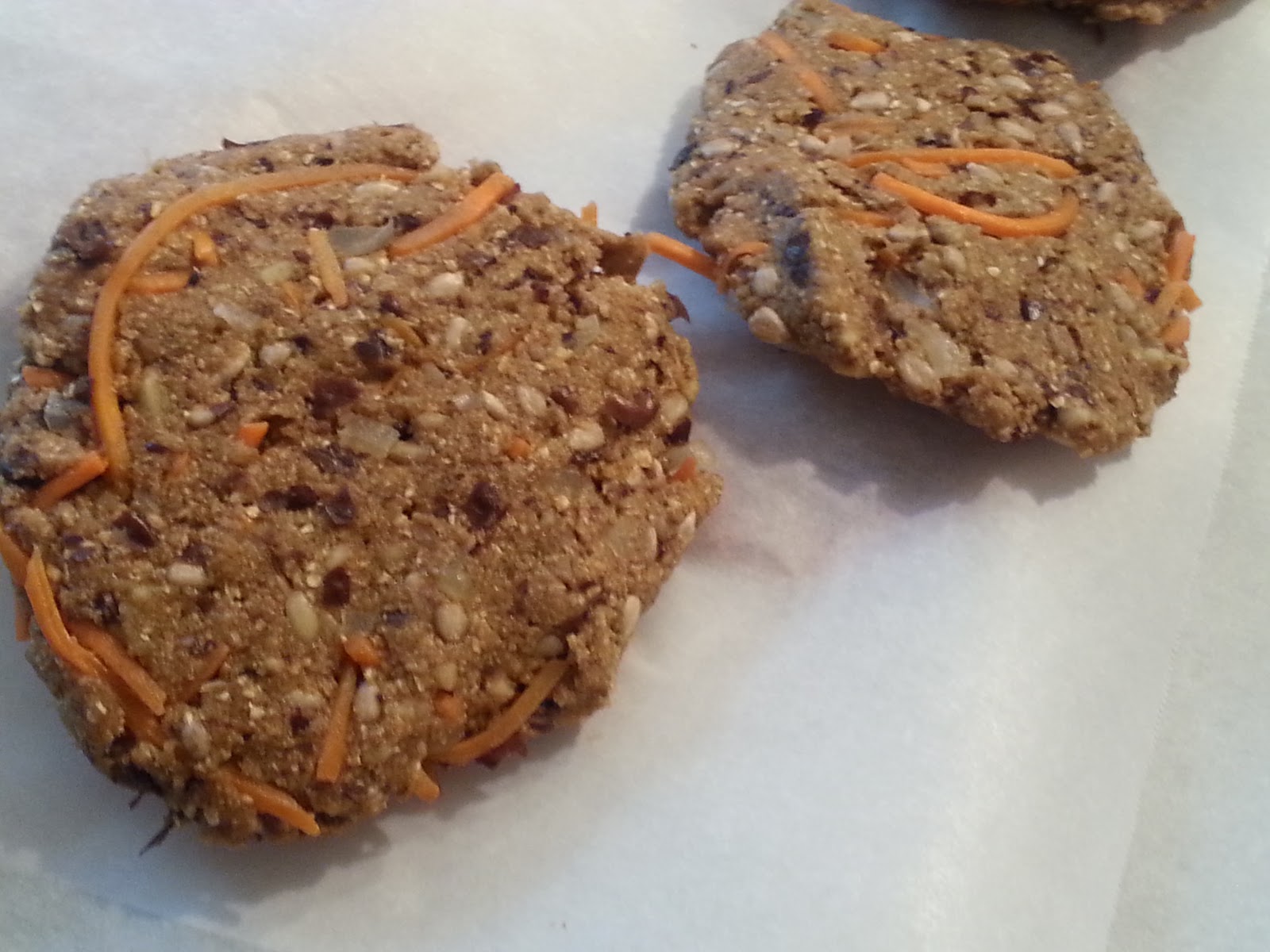
Before grilling

After grilling, topped with cheddar cheese!


Nutrition Facts:
Serving Size: 1 patty
Calories: 258
Calories from fat: 88.7

% Daily Value based on 2,000 calorie diet

Total fat: 9.86g (15%)
Saturated fat: 1.19g (5%)
Cholesterol: 69.38g (5%)
Sodium: 246.23g (10%)
Total carbohydrate: 31.04g (10%)
Dietary Fiber: 5.19g (20%)
Sugar: 2.56g
Protein: 10.75g (21%)

If you would like to try a veggie burger but don't want to mess with all of the prep and/or grilling, here are some of my favorite frozen burgers for you to check out! All of these come out great in the microwave, which makes them a great option for a quick and healthy meal. I used to pack them for lunches at work, along with a  sandwich thin bun, side salad and some fruit.


Wednesday, May 15, 2013

Don't Ruin a Healthy Salad!

Today when I got in from my run, I was craving a salad. I pulled a bunch of random stuff out of the refrigerator and ended up with spring greens, cucumber, mushroom, tomato, red onion and tofu. We were out of my favorite raspberry vinaigrette dressing, so I started checking out the nutrition labels of the different bottles we had in the fridge... and I just couldn't justify putting any of them on top of my beautiful healthy salad.

Most people make salads in an attempt to eat healthy and lose weight, but the way you choose to dress your salad can mean the difference between a healthy choice and a calorie and fat packed meal. Many of the bottled salad dressings out there are full of calories, fat and added sodium. For instance, Ken's Steakhouse Thousand Island dressing packs 13% of your daily sodium and 20% of your daily fat!


You may think you have been avoiding diet disaster by choosing the light version of your favorite dressing... but sadly that may not be the case. Hidden Valley Ranch Light dressing packs 12% of your daily sodium and 11% of your daily fat into TWO tablespoons.


Rather than smother my salad in calories, fat, sodium and ingredients I can't pronounce...I decided to whip up my own dressing. There are a million easy recipes out there, this is just what I created off the top of my head. It took me about 5 minutes and satisfied the tangy sweet flavor that I was craving. This would also be great on sandwiches or as a marinade for chicken breasts. It was a little higher in sugar than I wanted it to be.. but hey... I was improvising.

Katie's Honey Mustard Dressing

Makes about 4 two tablespoon servings

1/4 cup plain Chobani Greek Yogurt
1 Tablespoon extra virgin olive oil
2 Tablespoons red wine vinegar
2 teaspoons Dijon mustard
1 teaspoon honey

Combine oil, vinegar, and mustard in a bowl and combine well. Add yogurt and honey, and stir until all ingredients are combined.

Serving Size: 2 Tablespoons
Calories: 50
Fat: 3.63g
Sodium: 63mg
Sugars: 3.4g
Protein: 1.65g

If you can't avoid buying bottled dressings, try to find brands that contain no more than 50 calories and 140mg or less of sodium per 2 tablespoons. They can be hard to find, so here are a few suggestions for you to check out:

Bolthouse Farms Chunky Blue Cheese Yogurt Dressing
Trader Joe's Balsamic Vinaigrette
Annie's Lite Honey Mustard
Whole Foods 365 Raspberry Vinaigrette

I hope that these tips will help you keep your salads light and healthy this summer. Enjoy the beautiful weather and all of the fresh fruits and veggies that come with it!


Monday, April 29, 2013

There's An App For That!

The majority of the people that I spend time with consider their cell phones to be an extension of their arm.You can use your phone to check social media, get directions, check email, read books, listen to music...the list goes on. Our phones keep us in constant contact with each other and the world around us. While this can be annoying at times (like when your dinner partner finds their phone more interesting than you, but I digress) it is really pretty amazing what our phones can do. 

Did you know that there are all kinds of apps out there that can take some of the mystery out of healthy eating? So, put Candy Crush on pause, stop checking your Facebook news feed for the millionth time today, and check out some of my favorite apps that can make healthy eating simple.

#1. Fooducate

I am a weirdo who loves to stand in the aisle of the grocery store for hours and read nutrition labels as if they were popular novels. But, labels can be confusing with their many health claims and ingredients you can't pronounce. 

Fooducate is like having your own personal grocery shopping adviser who helps you decide what to buy. When you download Fooducate, you create a profile with your height, weight, and activity level. You then specify your goals, which could include losing weight, controlling carbohydrates, lowering cholesterol, lowering blood pressure, avoiding processed food, or eating vegetarian, to name a few.

In the grocery store, you scan the bar code of a food item and Fooducate grades the item on a scale from A to D based on your goals. The grade a food receives is based on the nutrition facts panel and the ingredient list. Minimally processed, nutrient dense foods score better than processed foods that use fortification to appear healthy. 


Fooducate is available for FREE on the iPhone and android. You can also read more about it here!

#2. Food on the Table

How does a weekly meal plan, healthy recipes your kids will love, savings at the grocery store, and an organized grocery list sound to you? Like a lot of work? Like you would need to be a Stepford wife to make it happen? I hear you. I used to spend my Sunday mornings going through store ads, clipping coupons, planning meals, and making my grocery list. Again, I am a freak of nature and most people don't have time for this. 

Food on the Table helps you plan healthy meals while saving time and money. When you make your meal plan for the week, you can select from a database of thousands of healthy recipes that don't require a lot of work. You can even pick your meals based on foods that are on sale in your store's weekly circular ad! Once you plan your meals, Food on the Table makes you an organized grocery list that will save you valuable time at the store. 


You can read more about Food on the Table by clicking here! It is available for FREE on the iPhone and
android.

#3. The Daily Plate 

 I started using the web version of The Daily Plate back in 2007. Of the many calorie trackers I have tried, this is my favorite. This app helps you reach your diet and fitness goals by tracking your daily calories and exercise. It boasts the largest food database on the Internet, and I personally think it is the easiest to use. 

When you set up your profile, you indicate your height, weight, activity level, and goal. You can choose to lose a certain amount of weight, maintain your current weight, or gain weight. The app will tell you not only how many calories you should consume, but it will give you allowances for fat, carbohydrates, protein, sugar, and salt. 

To track your daily food intake, you just type the food into the database, select it, and add it to your meal. What I love about The Daily Plate is that literally EVERYTHING is in their database. It is not limited to packaged foods, and you can even plug in your favorite recipes and have the app analyze their nutrition content. 
The Daily Plate app is $2.99 for the iPhone, Blackberry, or Android. I promise you that it's worth every penny, but if you want to try it out for free first, you can sign up for the web version for free by clicking here!

Healthy eating doesn't have to be complicated or time consuming, and I hope that these apps will help take some of the confusion and stress out of it for you. If you have a favorite app that I have not listed here, please tell me about it in the comments section! I am always looking for new nutrition tools to geek out over. 

Thursday, April 18, 2013

Guilt Free Skinny Popcorn

Hi!

Remember me? I used to keep this blog. And then I decided to take 18 hours of science and nutrition classes while working a part time job. And then I ran out of time to do things like... sleep. So this blog kind of went out the window. My summer schedule is much more manageable, so you can look forward to lots of blogs from your Dietitian in training very soon.

I am posting today because I couldn't wait to tell you about this:


One of my nutrition professors told my class about Skinny Pop Popcorn, and I have been on the hunt for it ever since. I finally found it this morning at Walgreens. When I read the ingredients, I was skeptical about why my professor was so crazy about this stuff. It's just popcorn, right? Wrong. It's DELICIOUS and it is now hands down my favorite healthy snack food.

The only ingredients are all natural popcorn (full of fiber), sunflower oil (full of heart-healthy polyunsaturated fats), and salt. The best part is... there are only 39 calories in one cup. Which means I don't feel guilty for sitting here in the library stuffing my face full of it while I study for finals.

You can check their website to find a store near you that sells it: http://www.skinnypop.com/. I promise you won't be sorry!


Tuesday, March 12, 2013

Would you like Type 2 Diabetes With That?

Growing up, my mom would take my brother and I to eat at McDonald's on Fridays before we went to watch my dad coach basketball at Colerain High School. We would each get happy meals, and then we would get to run around in the play place. This was a big deal, because we didn't eat a lot of fast food in my house. Going to McDonald's was always a special treat that we looked forward to.

Perhaps it's because of how I was raised... or because I am a health food freak... but to me fast food is still a special treat. Every once in a while there is nothing better than McDonald's french fries dipped in a chocolate shake. Or a mighty kids meal to cure a hangover. I mean... wait. I'm never hungover, mom. Just joking. 

Somewhere along the line, fast food became a staple for Americans. Did you know that most children in America can recognize McDonald's before they learn to speak? There are 31,000 McDonald's in North America, and we spend about 148.6 BILLION dollars on fast food every year. That averages out to about $492 PER PERSON every year on fast food.

What exactly are we getting for our $492?

Weight Gain
  •  Eating more than twice per week at fast food restaurants is linked to significantly more weight gain over time than occasional visits.
  • In 2009, researchers at the University of California, Berkeley found that living near a fast food restaurant is linked to a 5.2 percent greater risk of obesity.
  • If you eat a Big Mac, large fries, and large Coke, you will have to walk non-stop for six hours to burn off the calories you have gained.
Type 2 Diabetes
  • A 2004 study noted that regularly eating fast food doubles your chance of developing insulin resistance, which heightens risk of developing type 2 diabetes.
Cardiovascular Disease
  • In a 2005 study published in the "Canadian Journal of Public Health," found that regions with high concentrations of fast food restaurants are 2.62 times more likely to have extremely high levels of hospitalization for coronary problems.
Death
  • Fast food is associated with an increased risk of death even after ruling out deaths due to cardiovascular conditions
So, what do you do when life is crazy and you are short on time, but you would like to pass on the side order of death?

Keep easy items on hand at home
Yesterday, I was in Chemistry class from 10-3:30, went to the gym, went to the store, and still had to go home and study for a huge Anatomy and Physiology exam. By the time I finished my run, I was starving. I wanted a healthy meal but didn't have a ton of time to prepare something. This is what I came up with:

Italian soy sausage, brown rice blend, asparagus, mushroom, and onion with reduced fat Parmesan cheese.


Know how long this took me? 6 minutes. The sausage is made by Trader Joe's and takes 1:10 in the microwave. The rice is a frozen organic blend that heats up in the microwave in 3 minutes. While the sausage and rice microwaved, I popped the veggies (which were already cut up) into a skillet with a little bit of extra virgin olive oil.

Making a healthy meal does not have to be a big production, and keeping easy staples like this on hand can help you avoid a nutritional nightmare.

Here is how this meal breaks down:
Calories: 387.5
Fat: 9g
Sodium: 27.5g
Cholesterol: 0g
Sugar: 3.1g

Just to compare...
McDonald's double cheeseburger, large fries, large coke.
Calories: 1250
Fat: 48g
Sodium: 1520g
Cholesterol: 80g
Sugar: 93g


If you find yourself in a situation where avoiding the drive thru is impossible, try to order wisely. Opt for grilled instead of fried, skip the sauces, stay away from the cheese and bacon, only order a single hamburger patty, and replace the fries with a baked potato or side salad. Skip the coke and get a water or an unsweetened iced tea. Sweet tooth? Go for the fruit and yogurt parfait instead of the milkshake.

I know that many times the drive thru is unavoidable, so in my next post, I will show you how to make healthy choices at some of America's most popular fast food restaurants. If you have a favorite fast food restaurant or fast food choice, let me know in the comments section and I will include some healthy swaps just for you!


Friday, March 1, 2013

Guilt Free Mac N' Cheese

I love nutrition. Enough that I am studying to make a career out of helping people make food choices that will allow them to live long and healthy lives. I am a healthy eater who loves fruits, vegetables, whole grains, and real organic food. I don't drink soda, I don't eat meat, and I try to avoid processed foods. But we all have our weaknesses... and I happen to love macaroni and cheese. And pizza. And brownies. And chips and dip. But hey, I am getting off track and drooling all over my keyboard. So let's get back to what this blog is really about, and focus on the macaroni and cheese.

Mac n' cheese is the ultimate comfort food. It's warm... creamy... cheesy... and it's pasta- so it speaks to my Italian genes. Unfortunately, the calories and fat that come along with this traditional dish aren't so comforting. So sadly (but wisely), I have only ever indulged my love for mac n' cheese on special occasions.

That is until my mom found this Weight Watcher's recipe for butternut squash macaroni and cheese. I can feel you being skeptical from here... but don't stop reading now. I promise you won't be sorry.

This recipe uses butternut squash as a base for the cheese sauce, which significantly cuts down on the fat and calories without losing any flavor or creaminess. I was expecting it to be really squashy (which is fine with me because I love butternut squash) but it wasn't. It was thick, creamy, and cheesy, while delivering a healthy dose of nutrients, protein, and fiber. I literally had to restrain myself from licking the plate. There may or may not have been tears when I discovered the leftovers were gone.

So. Whether you are a butternut squash lover or not, you should try this dish. Of course, like I always say, it's all about moderation. Though it's tempting, you shouldn't eat the whole casserole dish in one sitting. Pair this with a vegetable and a side salad for a well balanced and filling meal.

Healthy eating is all about finding healthy ways to enjoy the things that you love, and this recipe is a perfect example of that!

Butternut Squash Macaroni and Cheese


Ingredients

  • 1 lb butternut squash, cubed
  • 12oz Ronzoni Smart Taste Macaroni Noodles (mom used fusilli, which held onto the sauce better)
  • 1/2 cup Panko breadcrumbs
  • 1 ½ cups fat free vegetable broth (Use an organic brand to cut down on sodium. I like Pacific Foods or Imagine Foods)
  • 1 cups fat free milk
  • 1 cup Gruyère cheese, shredded (mom replaced this with 2% cheddar)
  • 1 cup fresh Parmigiano-Reggiano cheese
  • 1/2 cup fat free plain Greek yogurt
  • 3 garlic cloves, minced
  • Salt and pepper to taste

Instructions

  1. Preheat oven to 375°.
  2. Combine squash, broth, milk, and garlic in a medium saucepan; bring to a boil over medium-high heat. Reduce heat to medium, and simmer until squash is tender when pierced with a fork, about 25 minutes. Remove from heat and let cool for about 10 minutes.
  3. Place the warm squash mixture in a blender. Add salt, pepper, and Greek yogurt. Blend until smooth. Place blended squash mixture in a bowl; stir in cheeses and mix until combined.
  4. Cook pasta according to package directions, drain well. Add pasta to squash mixture, and stir until combined. Spread mixture evenly into a 13 x 9-inch glass or ceramic baking dish coated with non-fat cooking spray.
  5. Sprinkle panko evenly over the hot pasta mixture. Lightly coat topping with cooking spray.
  6. Bake at 375° for about 20 minutes or until bubbly. Serve immediately.

Number of servings (yield): 8
 
PER SERVING:285 calories; 8g fat; 42g carbohydrates; 8g protein; 6g fiber. 5 Weight Watcher's points.


Thursday, February 7, 2013

Food as Fuel: Treating Your Body Like a BMW

I got a text from a friend the other day that pointed out I have been slacking big time on blogging! Taking 18 credit hours this semester is making it hard to find time to sleep, let alone blog! I'm feeling really inspired and positive today, and I felt like taking a study break to share my thoughts with all of you!

I recently did a project for my Nutrition Counseling and Communication Skills class that required us to follow a specific dietary regimen for a week. I chose low sodium, and had to plan a diet where I consumed no more than 1500 mg of sodium in a day. To get an idea of about how much sodium I normally consumed, I put a typical day of eating into a nutrition program, and was really shocked about what I found. Not about my sodium intake, which was pretty low, but that I was deficient in nearly every single vitamin and mineral there is.

I pride myself on being a pretty healthy eater, but because I am vegetarian and consume a low calorie diet, it is really difficult for me to get all of my nutrients through food. Taking a vitamin supplement is great, but nutrients that come from food are better utilized by your body. In planning the diet for my assignment, I had to stick to foods that were low in calories but had high nutrient content. These foods are known to be nutrient dense. Basically, following a nutrient dense diet is about getting more bang for your buck by choosing low calorie foods that pack a high amount of nutrition. The goal  is to pack in as many nutrients into a 1500 to 2000 calorie day, resulting in good health and protection from disease, not to mention good weight management!

This table from Eat Right America shows the ANDI (Aggregate Nutrient Density Index) scores for various foods. The higher the score, the higher the nutrient density.


This got me thinking a lot about food as fuel. The food we eat is more than just food... it is nutrients that allow us to function and perform to the best of our ability. Would you put cheap gas into an expensive BMW and expect it to drive the way you want? No. Just like you can't fill your body full of junk food and expect it to perform how you want it to.

The knowledge I gained from this assignment has inspired me to modify my diet to include more of these nutrient dense foods, and see if it improves my mood, energy level, cognitive ability, and fitness level. If you would like to join me in adding nutrient dense foods to your diet, here are some examples!

Vegetables

greens: romaine, kale, raw spinach and collards
carrots
Brussels sprouts
peppers
squash
sweet potatoes (yams)
celery
avocado
green beans
peas
asparagus
parsley (for juicing)
onions
garlic
broccoli

Fruit

all berries
cantaloupe
all melons
bananas
mangos
grapefruit
oranges
grapes
pineapple
cranberries
apples

Nuts

almonds
walnuts
cashews
brazil

Seeds 

flax
sunflower
pumpkin
sesame
hemp

Grain

oats
millet
quinoa
buckwheat
spelt
barley
wheat

Legumes

soybeans
chick peas
black-eyed peas
black beans
pinto beans
small white beans  

Fats

hemp oil
flax oil
pumpkin oil
olive oil

Animal Products

wild Pacific sockeye salmon
skinless chicken breasts
free range eggs
yogurt
goat’s cheese
cottage cheese

Natural sweeteners

Sucanat (a non-refined cane sugar which retains the molasses)
unpasteurized honey
frozen juice concentrates
blended dates and raisins

As a little inspiration, here is what I had for lunch today:

6 oz chobani plain Greek yogurt with banana, 1/2 cup blueberries, 1 tablespoon walnuts.
9 Grain Salad (olive oil, wheat berries, cous cous, lentils, brown rice, mung beans, curry powder, cider vinegar)
Not pictured: Luna Bar, chocolate peppermint stick flavor, which includes calcium, vitamin D, folic acid, and iron!


Ok! Back to studying I go. I hope that you will all be inspired to fuel your body with the foods that it needs to work its best for you! If you join me in my nutrient dense challenge, I would love to hear how you are incorporating these superfoods into your diet!